
- €26 million in direct impact on the local area across four years of activity
- More than 140 staff involved in organising the Games, 29,000 access permits managed, 12 athletes from the Progetto Giovani programme selected for the Games and 6 medals won.
- The Olympic legacy phase now begins, with a busy calendar of sporting events already scheduled for the 2026/27 season.
Cortina d’Ampezzo, 26 October 2026 – Fondazione Cortina closed the financial year ending 30 June 2026 with a net profit of more than €202,000 (+120%) and net assets exceeding €818,000 (+33%). The result caps a year defined by the preparation and local delivery of the Milano Cortina 2026 Olympic and Paralympic Winter Games, the culmination of the path Fondazione Cortina set out on in 2022 – a path that has generated €26 million in direct impact on the Veneto region.
Revenue more than tripled year on year to over €13.7 million (+125%), a figure that chiefly reflects the completion of the contracts awarded to Fondazione Cortina by Fondazione Milano Cortina 2026 for the design, organisation, set-up and management of the events and activities connected to the Games on the ground (€11.1 million in total). A further €1.16 million came from logistics services provided during the Games to federations, national Olympic committees and commercial partners, alongside €740,000 in sponsorship and partnership revenue.
Over the same period Fondazione Cortina incurred total costs of €13.3 million (+126% on 2025), the majority of which generated direct impact on the local area and on local businesses, which provided support in delivering the various services guaranteed by Fondazione Cortina.
Fondazione Cortina thus brings an important chapter of work to a close, built on transparency and sound management, thanks to PWC’s support for financial planning and management control, a voluntary audit by KPMG and the voluntary adoption of the Organisation and Management Model under Italian Legislative Decree 231/2001, overseen by a dedicated Supervisory Board.
Growth in volumes has gone hand in hand with a strengthening of the main balance-sheet and financial indicators: “The accounts for the Olympic year mark an important milestone for Fondazione Cortina. The Games demanded an extraordinary organisational effort, testing our organisation’s ability to coordinate skills, professionalism and local stakeholders in an exceptionally complex context. Closing the year with a positive result, stronger net assets and an improved financial position confirms the value of having approached this journey with a focus on economic sustainability and resource management. Our task now is to turn the wealth of skills, relationships and experience built up with Milano Cortina 2026 into lasting opportunities for Cortina, for the Belluno area and for young people, continuing to invest in sport, in promoting our territory and in our capacity to host major international events,” said Stefano Longo, President of Fondazione Cortina.
During the year, Fondazione Cortina operated as an External Delivery Entity (EDE) for Fondazione Milano Cortina 2026, taking responsibility for the design, organisation, set-up and local management of the women’s alpine skiing races on the Olympia delle Tofane piste, curling at the Olympic Ice Stadium, and bobsleigh, skeleton and luge at the Cortina Sliding Centre, as well as the Paralympic alpine skiing, snowboard and wheelchair curling competitions. The work involved more than 140 people, including employees, temporary staff and consultants, together with the coordination of local sports clubs (Sci Club Cortina, Curling Club Dolomiti, Bob Club Cortina and Snowboard Club Cortina), which took an active part in the Olympic project by managing the technical and sporting activities for the competitions.
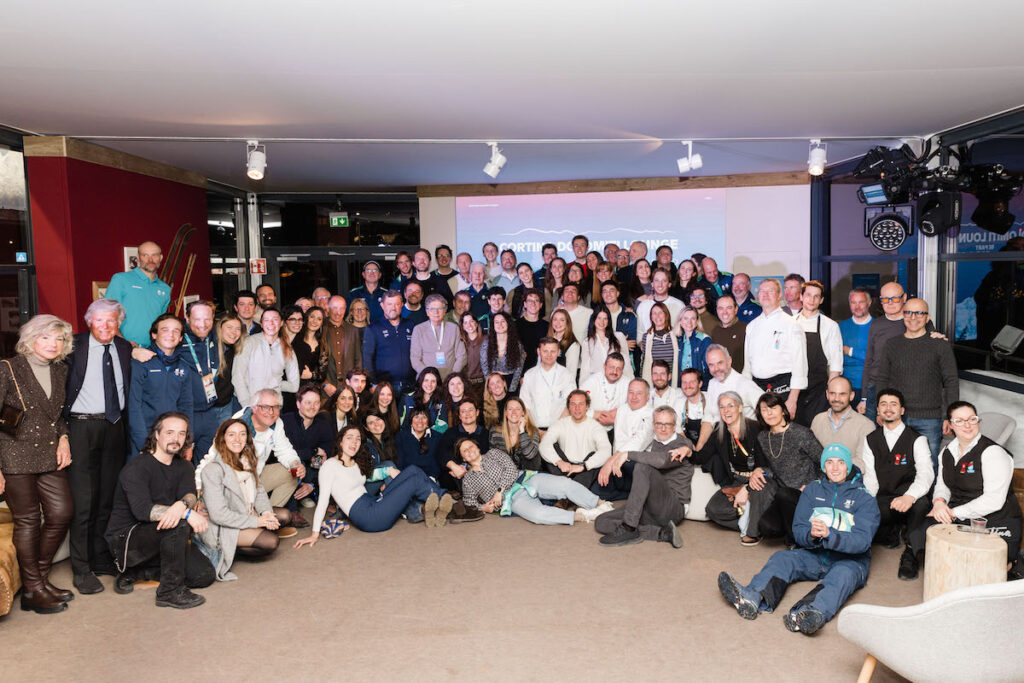
Fondazione Cortina’s remit also included the complex management of the vehicle pass system for access to the Olympic and Paralympic restricted traffic zone, with more than 29,000 permits managed and issued, as well as the major Cortina Dolomiti Lounge project, which established itself as a space for representation and networking for the local area. Over the 18 days of the Olympic Games it hosted 68 events, including presentations, talks and institutional conferences, welcoming around 3,000 people. During the 10 Paralympic days it organised a further 25 events with more than 1,100 guests, as well as the Cortina chef team, local businesses and sponsors.
Alongside its Games-related work, Fondazione Cortina continued its socially useful projects in collaboration with local stakeholders and institutions, including the launch and management of the Volontario Dolomitico platform, which now has more than 1,000 registered volunteers, and the final stages of the roadshow on Olympic and Paralympic disciplines within the regional “Veneto in Action” programme. The “Progetto Scuole” dedicated to local and regional schools, run with the Veneto Region and the Regional Education Office and in collaboration with Cortinabanca, enabled around 3,500 students from Veneto to attend the Paralympic curling, alpine skiing and snowboard competitions. The Progetto Giovani programme, launched in 2023 to support athletes from Veneto on their journey towards the Olympic and Paralympic dream, saw 12 team athletes selected for the Games (10 at the Olympics and 2 at the Paralympics), who won 6 medals between them.
With the Games now over, a new phase begins in which Fondazione Cortina will refocus on organising major international sporting events. For the 2026/27 season, the outdoor events Cortina 56-26 – The Legacy Trail (25 July) and The Great Ride (17–20 September) have already taken place, while major winter fixtures are fast approaching: the FIS Cortina Snowboard World Cup (12 December), the IBSF Bob&Skeleton World Cup (14–20 December), the eagerly awaited 2026/27 women’s AUDI FIS Alpine Ski World Cup (15–17 January 2027) and the FIL Luge World Cup (9–14 February 2027), along with a series of European championships in bobsleigh, skeleton and luge.
The calendar is complemented by events that promote the Olympic legacy through local, social and cultural projects that will continue over the coming months, including the “Cortina Future Talk” conference series, dedicated to debate on the issues shaping the future of mountain regions.